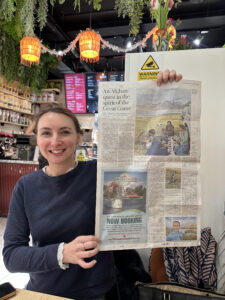
Oxus expedition featured in the Telegraph!
Our journey into one of Afghanistan’s most remote and misunderstood regions has been spotlighted by The Telegraph,
Our journey into one of Afghanistan’s most remote and misunderstood regions has been spotlighted by The Telegraph,
We’re delighted to share that our work has been spotlighted in Hugh Philpott’s Substack feature, “Seeking the
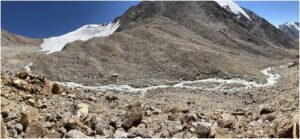
We’re proud to share that our latest research has been published in the peer-reviewed journal Asian Affairs,
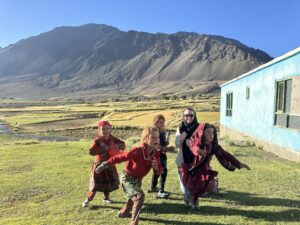
A daring journey across Afghanistan — where resilience meets repression, and the spirit of its women burns quietly against the odds. Through the Oxus Expedition, we uncover untold stories of courage, loss, and the unbroken pursuit of education, work, and freedom.
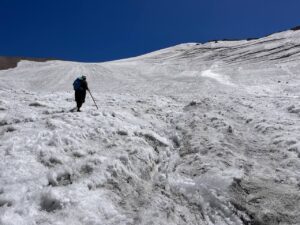
The day in which we finally identified a previously unrecorded river source: Is it the source of the Chelab? Is it the source of the Oxus? Read on to find out!
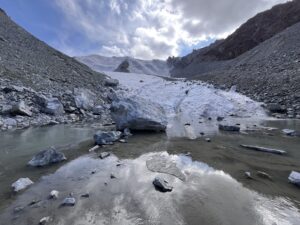
There’s no such thing as a bad day in the mountains. But there are days when you make mistakes, and it’s touch and go how the day will end. Safety must always come first.
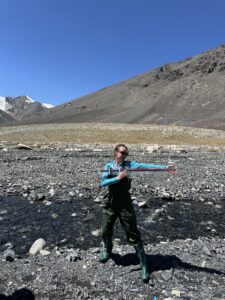
One definition of a river’s source is the stream carrying the greatest volume of water into the river system. We measured the Chelab’s four streams with a TVHR.
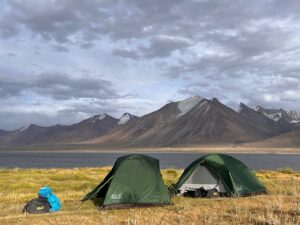
From scorching days to freezing nights in the Wakhan Corridor, Jack Wolfskin’s gear kept us safe, layered, and expedition-ready.
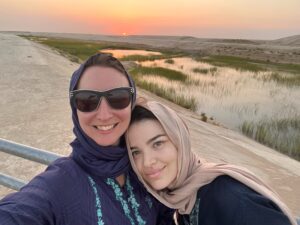
Once we crossed the border from Uzbekistan to Afghanistan, we still had many days to travel by road. From Mazar-i Sharif to Faizabad, then Ishkashim, and along the Wakhan Corridor, with several stops for bureaucracy along the way.
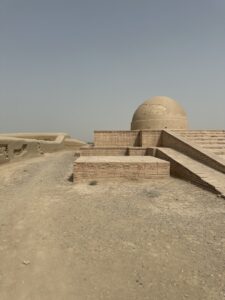
What to do when you’re in Termez longer than expected? Visit Fayaz Tepe and Kara Tepe to learn about the Buddhist history of Central Asia! Did you know that Buddhism spread from India to Uzbekistan in part along the River Oxus?
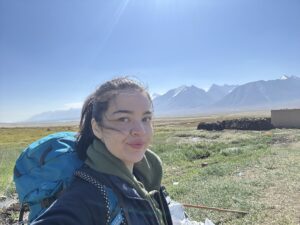

Everyone says the Aral Sea is gone — too salty, too polluted, lifeless. But beneath the morning sun, I couldn’t resist the chance to swim in its surreal, silent waters. Floating in the salt, laughing alone, it became an unexpected moment of joy and wonder.

The Oxus Expedition resumes, tracing the river’s final path to the vanished Aral Sea.A journey through dust, decline, and resilience ends with a glimpse of unexpected beauty. Where water once ruled, silence and memory now remain.

Karakalpakstan is booming and buzzing, but it’s on a verge of a water disaster. Is there a way to avoid it, or is the only option is to slow it down?

The Lower Amudarya Biosphere Reserve (LABR) is an oasis in the desert, the river bringing life to all manner of species within the tugai forest. But the future of the reserve is in jeopardy due to drought.


The ruins of caravanserais are dotted along the Silk Roads, but one of the best preserved examples is Dayakhatyn in Turkmenistan. It was built by the Seljuks in the 12th century and still stands almost intact, overlooking the Oxus in the distance.

Rising above the landscape on the southern outskirts of the modern settlement of Turkmenabat is a prominent flat-topped hill. It looks as if it could be a mesa, a landform typical of the deserts of North America.It is, in fact, what remains of one of the most significant settlements on the Oxus/Amu Darya River and a key trading post on the Silk Route. It is Amul.

There were always going to be two countries on the Oxus Expedition route which would be logistically and bureaucratically challenging: Afghanistan and Turkmenistan. I entered Turkmenistan in September 2024, the country had not long since re-opened after its COVID-19 lockdown. Read more on how the country has changed since!

It is always unnerving when Google Maps says that it’ll take six and a half hours to your destination, 22 km away. Is the road really that bad, or is it a glitch in the mapping algorithm? Follow us to Takht-i Sangin and the Temple of the Oxus!

Follow us to Khorog, the city on the Roof of the World.


Without doubt, driving the Pamir Highway is one of the world’s greatest road trips. And it’s impossible to avoid some challenges along the way.


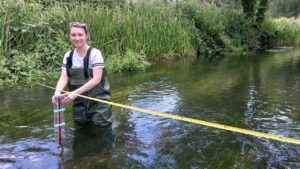
Sophie Ibbotson explains how to use a TVHR to determine the volume of water in a stream.

Team member Sophia Burna-Asefi introduces her training schedule for the Oxus Expedition

Read Sophia Burna-Asefi’s article about the historical signicance of the Oxus Expedition in the Rivers issue of Caravanserai magazine.

Journalist Dani Redd profiled Oxus Expedition’s team member Miskola Abdulloeva for Much Better Adventures.
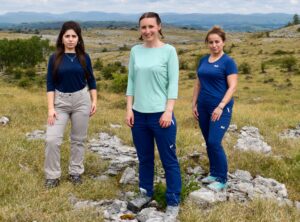
Find out about the Oxus Expedition team’s first training and equipment testing trip in the UK’s Lake District National Park.
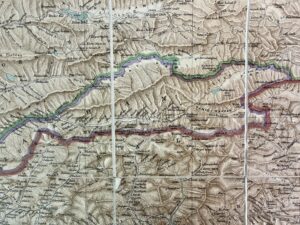
An introduction to some of the historical maps of the Wakhan Corridor which are held in the archives of the Royal Society for Asian Affairs.
The Oxus Expedition was born in 2020 in London. Or was it? Arguably it has been more than 100 years in the making.